

Laminate Worktop Stain Repair
Chemical Stain, Discolouration & Bleach Damage Repair Across Surrey, Hampshire & Berkshire
A stained laminate worktop is one of the most common calls we get — and one of the most misunderstood. Once a stain has penetrated past the clear wear layer into the decorative print beneath, no amount of scrubbing or retail stain remover will shift it. What most people don't realise is that the same damage that makes a stain look permanent is exactly what makes it repairable: the mark sits in a layer that can be rebuilt and repainted, rather than a colour that's genuinely gone forever.
We repair stained laminate worktops on-site across Surrey, Hampshire, and Berkshire, without the cost or disruption of a full replacement.
Understanding Laminate Staining
Laminate worktops are built from a thin decorative paper layer, printed with the wood grain, stone effect, or colour pattern, sealed under a clear melamine wear layer and bonded to a chipboard or MDF core. Staining behaves differently depending on how far it has travelled through that structure.
Surface staining — light marking sitting within the clear wear layer — can sometimes be managed with careful abrasive levelling alone.
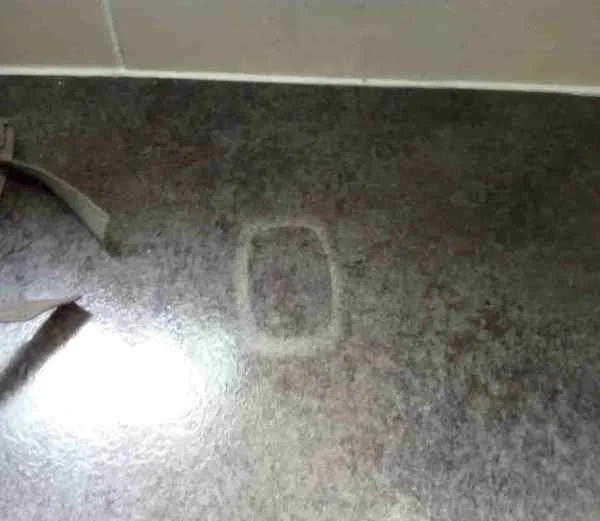
Pigment penetration — dye, ink, turmeric, or red wine that has worked past the wear layer into the decorative print — has permanently altered the printed pattern underneath. This can't be lifted out. It has to be rebuilt.
Bleach and chemical damage is the most severe category. Bleach doesn't sit on the surface — it chemically destroys the printed pigment beneath the wear layer, leaving a pale, distorted patch that will never fade back or clean away. The only fix is rebuilding the decorative layer by hand.
Getting the assessment right matters, because treating pigment penetration or bleach damage as if it were surface staining just wastes time and leaves the mark showing through.
Our Stain Repair Process
Stage 1: Assessment and Isolation
We identify how far the staining has penetrated before deciding on a repair approach. Surface staining, pigment penetration, and bleach damage are treated differently, and getting this stage right determines everything that follows.
Stage 2: Preparing the Damaged Area
Where the stain has penetrated the wear layer or affected the decorative print, we sand back the affected zone. Laminate is far more delicate than solid surface or stone — the decorative layer is thin, so our abrasive sequence never exceeds 240 grit. We do not use 80 grit on laminate; it's too aggressive for the decorative layer and will cut straight through it. Where the stain has caused deeper structural damage to the substrate beneath, we build the area back up using Easy 8 and Top Stop Gold filler before any surface work begins, and apply a substrate primer first to improve adhesion to the chipboard or MDF core.
Stage 3: Colour and Pattern Replication
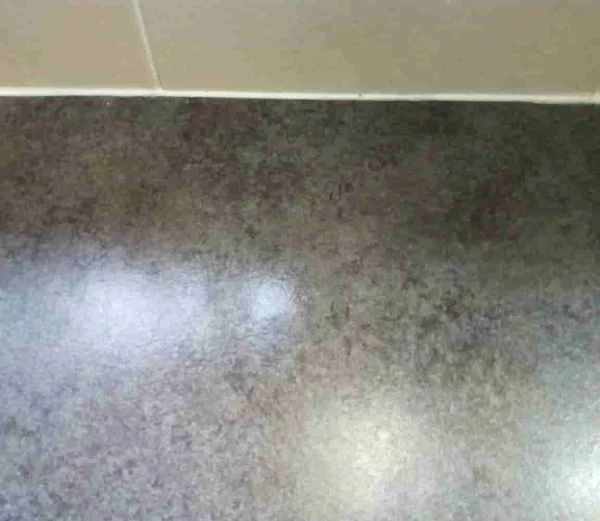
This is the stage that determines whether the repair is invisible. Using Tenax Vinyl Ester resin as the colour-matched top layer, combined with hand-grained acrylic enamel, we manually rebuild the wood grain, fleck pattern, or stone effect of the original surface. This is done by eye, matching the specific pattern of your worktop rather than applying a generic finish. A light sand at 240 grit is carried out between coats to keep the build-up level and consistent.
Stage 4: Sheen Matching
The final layer is calibrated to match your worktop's existing sheen — matt, satin, or gloss — so the repaired zone sits at the same reflectivity as the surrounding surface rather than standing out as a flatter or glossier patch.
An Honest Note on Stain Repair
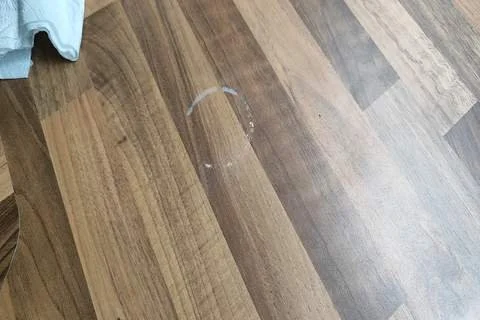
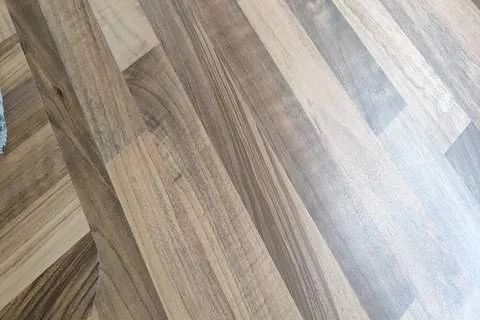
Pattern replication on laminate is a hand skill, not a chemical process — we are painting your worktop's specific grain or pattern back by eye, and the quality of that match depends on the complexity of the pattern and the size of the affected area. On plain, simple colours the result is genuinely very close to invisible. On busy, high-contrast wood grains or stone effects, a close inspection under raking light may still show where the repair sits, even though it is a dramatic improvement over the original stain.
Where bleach or a harsh chemical has affected a large area, or where staining has spread beneath the surface further than it first appears, we will always assess and tell you honestly what result is achievable before we start any work. We will not tell you a repair will be invisible if it won't be.
Frequently Asked Questions
Can any laminate stain be repaired, or do I need a replacement?
The vast majority can be repaired on-site, including bleach damage and deep pigment staining. Replacement is really only necessary where staining covers a very large area, or where the substrate beneath has been damaged beyond what filling can reasonably restore. We'll always give you an honest view before recommending replacement.
Can bleach damage actually be fixed, or is the colour gone for good?
The bleach-damaged pigment is permanently gone — no chemical treatment brings it back. What we do instead is rebuild the decorative layer by hand using colour-matched resin and hand-grained acrylic enamel, repainting the pattern that bleach destroyed. It's a different fix to a clean, but it works.
Will scrubbing the stain myself before you arrive make it worse?
It can. Scrubbing with an abrasive pad often removes the stain but leaves a dull, scratched patch behind, which usually means a larger repair area than if the stain had been left alone. If you've already scrubbed it, let us know when you book so we can assess the full extent.
How long does a stain repair take?
Most individual stain repairs are completed in a single visit, typically a few hours depending on the size of the affected area and the complexity of the pattern being replicated. Repairs involving substrate filling may need longer for the filler to cure properly before finishing.
Do you cover my area?
We cover Surrey, Hampshire, and Berkshire from our base in Ash, on the Surrey and Hampshire border. Call us on 01252 961927 to confirm coverage for your location.
Aftercare: Keeping Your Repaired Worktop Stain-Free
What to do:
Wipe up spills promptly, particularly wine, turmeric, coffee, and food colouring, which are the most common causes of laminate staining. Clean with a mild, non-abrasive cleaner and a soft cloth.
What to avoid:
Never use household bleach directly on laminate — it is the single most common cause of permanent staining we see. Avoid abrasive scouring pads and cream cleaners such as Cif, which scratch the wear layer and make future staining worse. Avoid leaving acidic spills such as lemon juice or vinegar sitting on the surface.
Need Your Laminate Worktop Assessed?
If your laminate worktop has a stubborn stain, bleach damage, or discolouration you've been told means replacement, call us before you accept that quote. In the vast majority of cases we can repair it on-site, at a fraction of the cost of a new worktop.
→ For scorch and heat marks on laminate worktops, see our [Laminate Worktop Burn Repair] page
→ For chips and impact damage, see our [Chipped Laminate Worktop Repair] page
→ For Stains and bleach marks, see our [Laminate Worktop Stain Repair] page
→ For ater damage and swelling, see our [Water Damage Laminate Worktop Repair] page
→ For a full overview of our laminate repair services, return to the [Laminate Worktop Repair Services] hub
→ View our full range of worktop repair services on the [Surrey Worktop Repair] hub