

Professional Wood Kitchen Worktop Sanding & Restoration Services
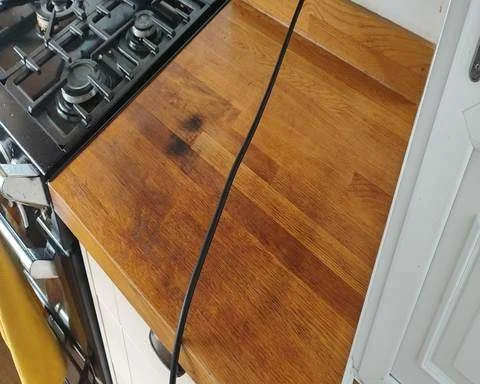
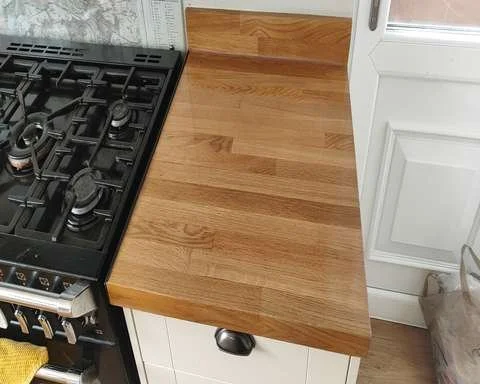
Are your solid wood worktops looking tired, dry, or drab? Over time, everyday kitchen use can leave beautiful timber surfaces stained, scratched, or sticky to the touch. Don’t spend thousands replacing them. Our professional, dust-less wooden worktop restoration service removes years of damage.
Providing mobile service throughout Surrey, Hampshire, and Berkshire, we transform your existing timber worktops into beautiful kitchen features with an exquisite new finish in matt, satin, or gloss. Our specialist service restores your surfaces to mint condition for a fraction of the cost of buying new. Using premium, modern hardwax oils that completely outlast traditional, slow-curing DIY finishes like Danish, Tung, or linseed oil. While old-fashioned hardware store oils dry out quickly and turn sticky, our advanced trade-grade coatings bond directly with the timber at a molecular level to form an incredibly durable, water-repellent barrier.
Why Choose Our Dust-Free Worktop Restoration?
99% Dust-Less Sanding: Our advanced Japanese and Finnish extraction systems capture 99% of airborne particles.
5-Year Surface Lifecycle: Our premium British-made finishes do not get sticky. By combining our heavy-duty initial restoration with a quick, low-friction top-up at the 2-year mark, your timber gains up to 5 full years of robust defense before ever requiring another intensive full re-sand.
Antibacterial & Child-Safe: Our finishes cure within 24 hours and are certified safe for food preparation areas (DIN 53160 EN 71-3).
Cheaper Than Replacement: We sand away rings, burns, and deep stains to expose pristine, fresh timber beneath.
Common Wood Countertop Damage & Specialized Services We Provide
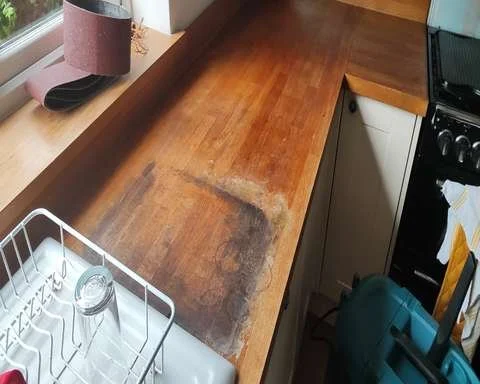
1. Water Damage & Black Tannin Staining: Hardwood timber, especially solid oak, contains high levels of natural tannic acid. When a wet cast-iron pan sits on the counter or moisture breaks through a failing sealant, a chemical reaction occurs that turns the wood fibers jet black. We use precision trade techniques to strip past these tannin reactions and safely neutralize the deep discoloration within the grain without over-sanding or dipping the countertop profile. Learn more about our technical process for [Water Damage and Black Stain Removal].
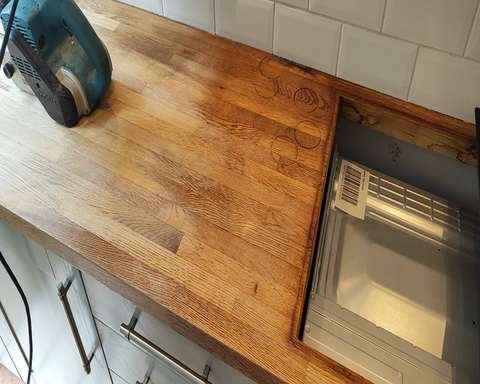
2. Scorches, Burns & Heat Rings: Placing boiling pots, hot baking trays, or mugs directly onto unprotected wood carbonizes the timber fibers, leaving behind deep black carbon burns or hazy white heat rings. Using specialized carbide scrapers, we carefully excavate the damaged wood cells and employ gradient blending techniques to seamlessly feather the repair into the surrounding grain. Read our guide on [Wood Scorch and Heat Burn Repair].
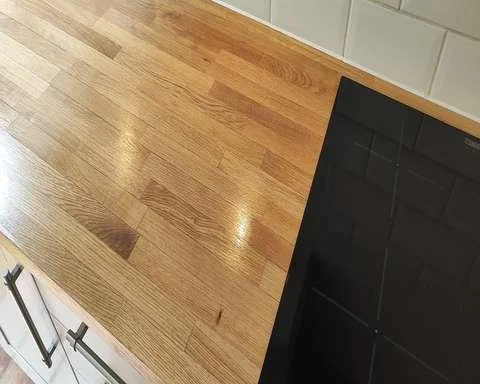
3. Discoloration, Dullness & Worn Coatings: High-traffic prep zones, chopping areas, and surfaces exposed to direct sunlight quickly become dry, sun-bleached, and faded. This fiber desiccation leaves the timber unprotected against daily liquid spills. We perform deep-grain rejuvenation to restore the timber's natural rich tones and apply uniform sheen matching across the entire layout. Explore our solutions for [Faded Wood and Coating Rejuvenation].
4. Sticky, Gummy, or Tacky Surfaces: When traditional Danish oil or clear varnishes are over-applied or applied directly over built-up kitchen grease, the chemical dryers fail to evaporate. This leaves behind a sticky, soft polymeric buildup that catches dust and melts under standard power sanders. We use heavy-duty dual-grip scrapers to cleanly slice away this soft residue down to the bare timber before commencing dustless sanding. See how we handle [Stripping Sticky and Gummy Danish Oil].
5. Gouges, Deep Scratches, Cracks & Split Joints: Heavy physical impacts can chip sharp counter profiles, while seasonal humidity shifts and kitchen heating can cause structural butt-joints and grain lines to split open. We resolve these structural defects by cleaning out failed adhesives, drawing the sections tight with mechanical tension, and stabilizing voids using premium, color-matched two-part tinted wood resins, meticulously grain-grouting the repair to ensure it moves naturally with the timber run. Learn more about [Repairing Wood Chips, Gouges, Cracks, and Splits].
6. Undermount Sink & Tap Zone Rot Remediation: Constant standing water around undermount sink cutouts and behind tap bases will inevitably rot the structural core of the wood, turning the timber black and spongy. Where standard sanding cannot salvage the area, we offer a specialized structural timber reconstruction service. We route out the failed, rotten sections completely, apply anti-fungal stabilizers, and precision-piece in fresh, color-matched timber inserts, flush-planing them into the existing run to save you from a full worktop replacement. Read our guide on [Undermount Sink Rot and Tap Zone Repair].
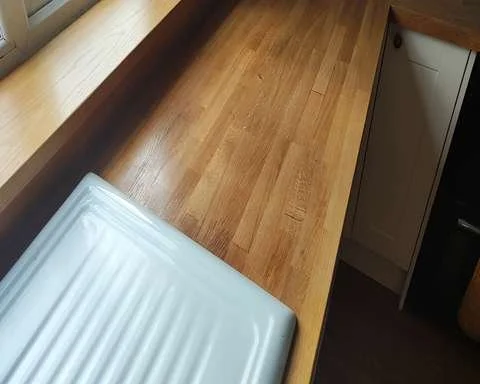
7. Precision Sloped Drainer Groove Machining: If your existing timber worktops were installed flat next to a sink, standing water will rapidly destroy the protective seal. While your surfaces are stripped down to bare wood during restoration, we can use specialized engineering jigs and plunge routers to machine elegant, precision-sloped draining grooves directly into the timber to guide water back into the basin. We also provide honest consultative advice on combining this with modern self-draining drying racks for ultimate timber longevity. Explore our services for [Machining Countertop Drainer Grooves].
8. Commercial Bar, Restaurant & Hospitality Renovation: High-abuse commercial counters endure a relentless daily onslaught of spilled alcohol, acidic citrus juices, and harsh industrial chemical cleaners. Unlike domestic contractors who use rigid 2-pack polyurethanes that shatter white under minimal impact or crack when the wood moves, we deploy premium, flexible hardwax oils. Fully certified to British Standards (BS EN 12720) for absolute liquid resistance, our commercial system allows for rapid overnight curing and seamless, low-friction spot repairs with zero business downtime. View our B2B solutions for [Commercial Bar and Table Restoration].
9. The 2-Year Preventative Maintenance Top-Up: You do not have to wait for your timber surfaces to rot or turn black before taking action. To protect your investment, we offer a proactive, low-friction maintenance service for previously restored or healthy worktops. By executing a clean, dustless light key-sand and buffing in a fresh, protective maintenance layer of premium hardwax oil, we reinforce your surface's water-repellent barrier before the underlying timber is exposed to damage. Learn about our [2-Year Preventative Maintenance Top-Up Program].
Our Step-by-Step Wood Worktop Restoration Process
To achieve a flawless, factory-smooth finish, we follow a strict, multi-stage restoration process that respects the natural grain of your timber.
Stage 1: Surface Preparation & Degreasing
Before any sandpaper touches the timber, we clean the surface using specialized solvents. This removes built-up kitchen grease, cooking wax, and sticky, uncured Danish oil that would otherwise clog our sanding discs and compromise the new finish.
Stage 2: Heavy-Grit Leveling & Damage Removal
We begin the physical restoration using heavy-weight belt sanders fitted with 40 grit. This aggressive stage quickly levels out uneven joints, buzzes away deep knife scratches, and grinds out stubborn black water stains or burns to reveal fresh, healthy wood beneath.
Stage 3: Progressive Multi-Stage Orbital Sanding
Next, we switch to random orbital sanders. We systematically work our way through progressive grit sequences (typically from 80-grit up to 120-grit), going higher than 120 grit will burnish the wood fibers with a DA sander. This multi-stage process completely removes the heavy scratch patterns left by the belt sander, leaving the timber incredibly smooth to the touch.
Stage 4: Dust Extraction & Grain Vacuuming
While our sanders hook directly into high-powered shop vacs to capture 99% of airborne particles, a microscopic layer of dust always remains in the wood grain. We perform a final, meticulous vacuum and wipe-down of the entire surface to ensure no particles ruin the sealing stage.
Stage 5: Premium Natural Sealant Application
Finally, we apply our top coat of choice Fiddes hardwax oil using synthetic brushes. Unlike standard worktop oils that sit on top of the wood and turn sticky, our premium product penetrates deep into the grain. We apply multiple coats to achieve your chosen finish—whether matt, satin, or gloss—providing a highly durable, antimicrobial barrier that lasts for 5 years. The edges are sealed with Soudal Silirub neutral silicone in either brown, clear or white.
Commercial-Grade Materials & Equipment We Use
Achieving a long-lasting, showroom finish requires trade-exclusive materials. We invest heavily in premium equipment so you get the best possible result without making a mess of your home:
Industrial M-Class Dust Extraction
We operate a Makita VC4210M M-Class extractor hooked directly to our power tools. Hardwood dust is incredibly fine, gets everywhere air can travel, and is classified as a hazardous substance. This commercial system actively pulls 99% of dust particles straight from the sander head before they can escape into your home, keeping your kitchen's air clean, safe, and completely breathable throughout the process.
High-Performance Random Orbital & Belt Sanders
For the flat expanses of your countertops, we use the industry-leading Mirka DEROS random orbital sander paired with advanced ceramic net abrasives (like Mirka Abranet). Unlike cheap sandpaper that tears, heats up the wood, and gums up with old oil, our trade-grade net discs feature thousands of microscopic holes that allow the vacuum to pull dust right through the disc. For heavily stained, cupped, or sticky areas, we deploy the high-torque Makita 9403 heavy-duty belt sander to rapidly level the timber back to fresh wood.
Precision Power Filing & Detail Tools
Kitchens are full of tight gaps, especially behind sinks, hobs, and upright splashbacks. To restore these awkward zones without damaging your tiles, we use specialized Makita 9032 filing sanders equipped with ultra-narrow 9mm and 18mm sanding arms. This allows us to meticulously power-sand every single millimetre of your worktop, ensuring a completely seamless finish across the entire kitchen layout.
Specialist Hand Tools & Manual Implements
While our advanced machinery handles the vast majority of the resurfacing, achieving a flawless finish around intricate kitchen fixtures requires precision manual craftsmanship. We use a specialized kit of hand tools to protect your kitchen while ensuring no old coatings are left behind:
Hamilton Perfection Precision Paint Scraper (with 3 Carbide Blades & Holster): This ultra-sharp carbide tool is essential for detailing crisp timber edges where a belt sander cannot reach. Its specialized curved profile is uniquely suited for flawlessly scraping old, deteriorated coatings out of machined draining grooves without altering the profile of the wood.
Purdy 2.5-Inch 4-Edge Scraper (with Knob): When dealing with older worktops covered in sticky, failed Danish oil or soft, gummy varnishes, power sanders can melt the finish and clog up immediately. We use this heavy-duty, dual-grip Purdy scraper to cleanly slice away the bulk of the soft residue down to bare timber before we begin the dustless sanding stages.
Stanley Retractable Knife: Precision matters when separating your timber countertops from surrounding surfaces. We use trade-grade utility knives to cleanly cut away old, degraded silicone and mastic seals from splashbacks, tiles, and sinks, ensuring a completely clean border before restoration begins.
Bevel-Edge Wood Chisels: A set of sharp, professional-grade bench chisels is always on hand for intricate detail work. We use these versatile tools as micro-scrapers or miniature hand planes to carefully clean out tight internal corners, narrow sink lips, and hard-to-reach joints where even detail power sanders cannot fit.
Frequently Asked Questions
Why is my wooden worktop sticky?
Wooden worktops become sticky for two main reasons: an over-application of Danish oil, or using old oil where the chemical dryers have evaporated. While you can spend hours trying to scrub this sticky mess away with rags and white spirit, our professional team can safely buzz the residue off in minutes using specialized trade sanders.
Is the sanding process noisy?
Yes, it can be a bit noisy. To ensure a 99% dust-free environment, our high-powered dust extractors must run simultaneously with our belt sanders. Most clients working from home find the noise completely manageable from the next room with the door closed—it sounds similar to an early 1990s vacuum cleaner.
What can I clean my restored worktops with?
For daily cleaning, use a dedicated antibacterial spray made specifically for wooden countertops. We highly recommend weekly maintenance sprays from trusted brands like Osmo, Fiddes, or Woca. These contain natural, plant-based oils that gently replenish and protect the timber without stripping the seal.
Can I sand my own kitchen worktops DIY?
You can, but it is a major gamble. To achieve a professional finish, you would need to invest roughly £900 in professional-grade sanders, dust extractors, brushes, and premium sealants. Hiring a specialist ensures a flawless, brush-stroke-free finish without the upfront equipment costs or the risk of permanently gouging your timber.
What areas do you travel to for wood restoration?
Our mobile units are fully equipped to handle on-site sanding and sealing across the entire region. You can view our full coverage layout on our main [Surrey Worktop Repair Hub].
Tailored Restoration for Every Timber Species
Not all wooden worktops are treated equally. Different wood species possess unique densities, grain patterns, and chemical compositions that dictate our sanding and finishing approach.
Oak Worktops: Oak contains high levels of natural tannic acid. When water or wet metal sits on the surface, a chemical reaction occurs, leaving dark black stains. We use deep-cut abrasives to safely sand past these tannin reactions without dipping the timber profile.
Walnut & Iroko: These dark, exotic hardwoods are rich in natural oils. They require meticulous degreasing with white spirit and dewaxed shellac priming during Stage 1 to ensure our Fiddes hardwax oil bonds perfectly with the wood fibers without peeling.
Beech & Maple: These pale, ultra-dense woods have incredibly tight grain patterns. They easily show circular sanding marks if a low-grade tool is used. We use multi-stage progressive grit sequences up to 120-grit to guarantee a glass-smooth finish.
Bamboo Worktops: Unlike traditional hardwood, bamboo is technically a dense grass held together by natural resins. It can easily splinter or delaminate if aggressively sanded with heavy-belt machinery. We use ultra-flat, high-speed random orbital sanders with precise, fine-grit sequences to cleanly level the surface without tearing the fibrous structural strands.
Proactive Aftercare: Protecting Your 5-Year Investment
Our premium plant-based seal sealants are incredibly durable, antimicrobial, and completely waterproof. However, executing proper daily care ensures your countertops retain their showroom look for the full 5 years before needing a top coat.
What to Do:
Wipe Spills Immediately: While water-resistant, standing puddles from sinks should be wiped dry with a cloth to prevent hard-water lime scale buildup.
Use Eco-Friendly Cleansers: Clean daily using specialized, pH-neutral wood surface cleaners (such as Osmo or Fiddes sprays) that replenish the protective oils.
What to Avoid:
Never Use Bleach or Direct Abrasives: Harsh supermarket chemical sprays, flash cleaners, and green scouring pads will slowly erode and chemically strip away the protective topcoat.
Avoid Direct Heat: Never place boiling pots or pans straight from the stove onto the timber. Always use trivets or heat-resistant mats to prevent deep wood scorching.