
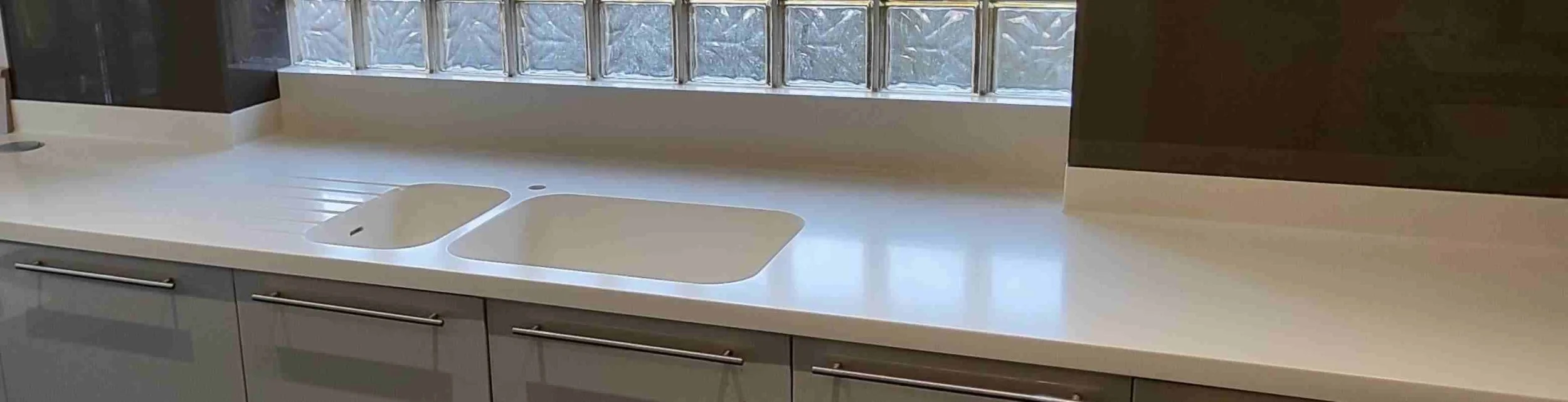
Laminate Worktop Repair Services
Chip, Burn, Water Damage & Stain Repair for Laminate Worktops Across Surrey, Hampshire & Berkshire
Laminate is the most common worktop material in UK kitchens, and also the most misunderstood when it is damaged. Most people assume a chip, burn, or water-swollen edge means the whole run has to come out. In the majority of cases it does not.
With 20 years of hands-on experience working exclusively on kitchen worktops, I repair laminate on-site across Surrey, Hampshire, and Berkshire — rebuilding the damaged area, hand-matching the pattern, and blending the repair back into the surrounding surface without removing or replacing the worktop.
Why Laminate Damage Needs a Different Approach to Solid Surface or Stone
Laminate is not a solid material through its thickness. It is a thin decorative layer bonded to a chipboard or MDF core, which means the repair approach has to account for two very different things at once: rebuilding a structural core that has been chipped, burned, or swollen with water, and recreating a printed decorative pattern that has no depth to abrade back into, unlike Corian or stone.
This is why laminate repair uses a lower abrasive ceiling than the other materials I work with. Corian and stone can be worked at 80 grit and coarser because the colour runs through the material. Laminate cannot — 80 grit would cut straight through the thin decorative layer and expose the core underneath. Laminate work never goes coarser than 240 grit, and most finishing work sits at 240 grit exactly.
Our Laminate Repair Services
1. Chipped Laminate Worktop Repair
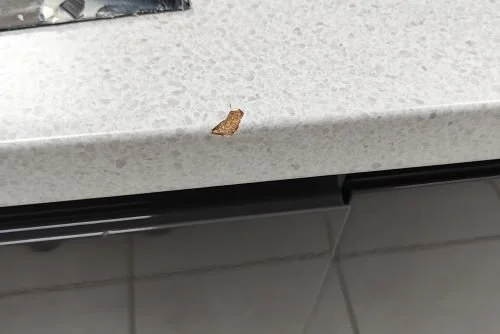
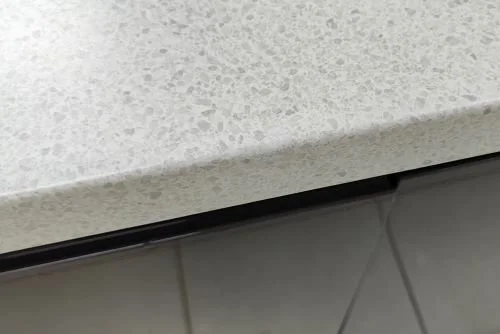
Impact chips from dropped mugs, knives, or rough handling during a kitchen fit expose the chipboard or MDF substrate beneath the decorative layer. Left unfilled, these chips let moisture and grease into the exposed core, which spreads the damage over time.
I rebuild the damaged area using Easy 8 and Top Stop Gold for bulk substrate filling, with a substrate primer applied first to improve adhesion to the chipboard or MDF core. The final colour-matched surface layer is built up using Tenax Vinyl Ester resin, with the decorative pattern — wood grain, fleck, or fine detail — hand-recreated using solvent-based acrylic enamel and fine detail brushes.
→ Read our detailed guide on [Chipped Laminate Worktop Repair]
2. Laminate Worktop Burn Repair
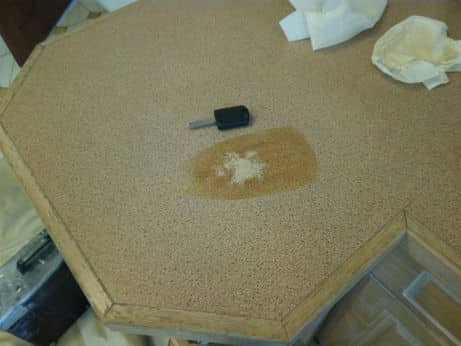
A hot pan, baking tray, or heat gun left in direct contact with laminate scorches and blisters the decorative layer, often lifting it away from the substrate beneath. As with chip damage, this is a rebuild rather than a polish — the charred material is removed back to sound substrate, filled, and the pattern hand-recreated over the top.
→ Read our detailed guide on [Laminate Worktop Burn Repair]
3. Water-Damaged Laminate Worktop Repair
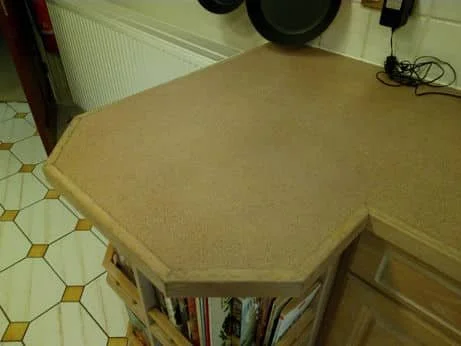
Laminate's decorative surface resists water, but the joints and edges do not. Where water gets past a poorly sealed sink cutout or worktop joint, the chipboard or MDF core beneath absorbs moisture and swells, producing the bumpy, raised "blown joint" that most people recognise immediately once they know what to look for.
This repair only proceeds once the core is confirmed dry — filling or sealing over damp substrate does not hold. Once dry, the swollen substrate is levelled, the structural core reinforced, and the joint rebuilt using the same substrate primer, Easy 8/Top Stop Gold, and Tenax Vinyl Ester colour-matched top layer used across the rest of the laminate process.
→ Read our detailed guide on [Water-Damaged Laminate Worktop Repair]
4. Laminate Worktop Stain Repair
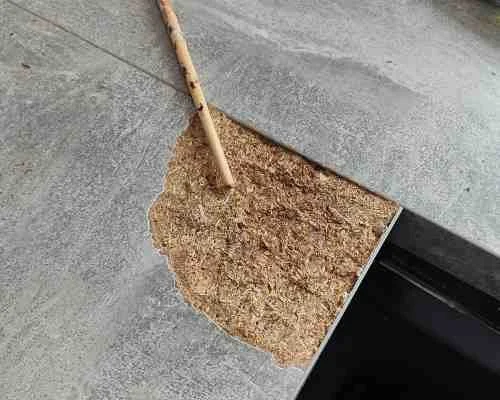
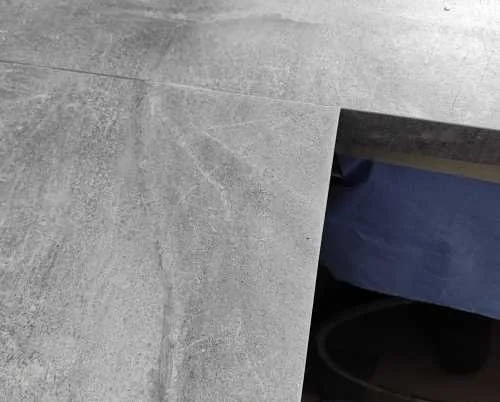
Turmeric, red wine, and household chemical staining can penetrate the surface layer of laminate deeply enough that ordinary cleaning will not lift it. Where the stain sits within the decorative layer itself rather than indicating deeper substrate damage, I treat it with the same colour-matched resin and hand-grained approach used for chip and burn repair, rather than attempting to bleach or chemically strip the surface.
→ Read our detailed guide on [Laminate Worktop Stain Repair]
Our Method & Materials
Substrate primer — applied before any filling work to improve adhesion between the filler and the chipboard or MDF core.
Easy 8 and Top Stop Gold — used for bulk substrate filling on deeper chips, burns, and water-damaged sections. These rebuild the structural core before any colour-matched surface work begins.
Tenax Vinyl Ester resin — used as the final, colour-matched top layer across all laminate repair types, providing the visible surface the pattern work sits on top of.
Hand-grained acrylic enamel — solvent-based acrylic enamel, mixed and applied by hand with fine detail brushes to replicate wood grain, fleck, or pattern detail specific to your worktop.
240 grit maximum — laminate is never worked coarser than 240 grit. The decorative layer is too thin to withstand the heavier abrasives used on Corian or stone, so a light 240 grit sand is used between coats rather than aggressive stock removal.
An Honest Note on Laminate Repair
Laminate repair is a rebuild-and-recreate process, not a polish. Because the decorative pattern is hand-painted back on rather than abraded out of a solid material, the strength of the colour and pattern match depends on the complexity of your worktop's pattern and the skill applied to recreating it. Plain, dark, or simply-fleck surfaces match extremely well. Busy wood-grain patterns can be matched closely but may show very slight variation under close inspection in strong direct light.
Where water damage has been present for some time, the extent of substrate swelling is not always fully visible until the damaged area is opened up. I will assess this honestly on-site and confirm the scope of work before proceeding — if a repair is not realistically achievable, I will tell you that rather than attempting one that will not hold.
Frequently Asked Questions
Can all laminate damage be repaired, or does some need replacement?
The majority of chips, burns, isolated stains, and water damage confined to a joint or edge are repairable on-site. Replacement becomes the sensible option where water damage has spread extensively through the substrate across a large area, or where the decorative pattern is discontinued and a large visible section needs matching. I will assess and advise honestly before any work begins.
Do you repair scuffs and light surface scratches as well as chips?
Yes. Light surface wear is treated with the same filling and hand-finishing approach, scaled down to the extent of the damage.
Can you repair a damp or wet laminate worktop?
No. The substrate must be fully dry before filling begins — filler will not bond properly to damp chipboard or MDF, and the repair will fail. Where the worktop is currently wet, I will advise on drying time before work can proceed.
Will the repair be invisible?
On plain or simply-patterned laminate, the result is very close to seamless. On complex wood-grain patterns, the match is strong but may show very slight variation under close inspection — I will always give you an honest view of what is achievable for your specific worktop before starting.
How long does a repair take?
Most single-area chip, burn, or stain repairs are completed in a single visit. Water-damaged sections may need a return visit if the substrate requires drying time before filling can begin. I will give you a clear estimate when I assess the job.
Do you cover my area?
Yes — Surrey, Hampshire, and Berkshire, from my base in Ash on the Surrey and Hampshire border. Call 01252 961927 to confirm coverage for your location.
Aftercare: Keeping Your Repaired Laminate Worktop in Good Condition
What to do:
Clean daily with a mild, pH-neutral surface cleaner and a soft cloth. Wipe up spills — particularly around sink cutouts and joints — promptly to prevent moisture reaching the substrate.
What to avoid:
Never place hot pans, baking trays, or heat guns directly onto the surface — always use a trivet. Avoid abrasive scouring pads and household abrasive cleaners such as Cif, which will dull and scratch the decorative layer. Do not allow standing water to sit around sink cutouts, taps, or worktop joints, as this is the primary cause of substrate swelling and blown joints.
Need Your Laminate Worktop Assessed?
I provide specialist laminate chip repair, burn repair, water damage repair, and stain repair for domestic and commercial kitchens across Surrey, Hampshire, and Berkshire. If your laminate worktop is chipped, scorched, swollen, or stained, call before you accept a replacement quote.
→ For impact chips and edge damage, see our [Chipped Laminate Worktop Repair] page
→ For scorch marks and heat damage, see our [Laminate Worktop Burn Repair] page
→ For swollen joints and water ingress, see our [Water-Damaged Laminate Worktop Repair] page
→ For staining and discolouration, see our [Laminate Worktop Stain Repair] page
→ View our full range of worktop repair services on the [Surrey Worktop Repair] hub
Contact us about laminate worktop repair near you