

What is the best sander for wooden worktops?
What are the best sanders that pros use for worktops
The best sander for wooden worktops is a random orbital sander, I have been using sanders for over 20 years and it would be my choice if I could only have one type of sander.
Random orbital sanders provide a superior finish and a better dust collection when compared to other types of sanders making it the best allrounder. But don’t jump to buy one just yet! Other kinds of sanders could prove more useful to you by the end of the article.
Choosing the correct type of sander for your worktops and knowing when and how to use it could make them look amazing and save you some backache and time.
If you're a DIY enthusiast and need some tips to help get you through the choice of sanders you've come to the right place.
Worktop sanding tools
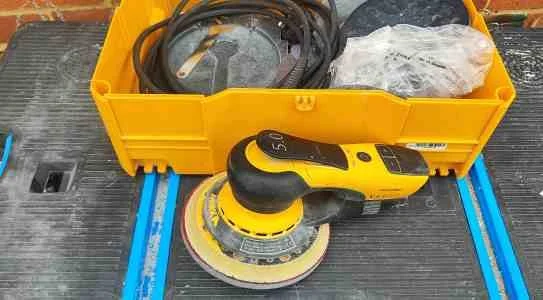
Random orbital sanders
Positives
Random orbital sanders are good all-rounder, they are in the middle when it comes to aggressiveness when sanding worktops. Random orbital sanders leave a finish that’s smooth and very easy to use and the dust extraction is excellent when paired with a dust extractor
Negatives
Random orbital sanders are not the quickest at removing products from wooden worktop surfaces.
Detail sanders
Positives
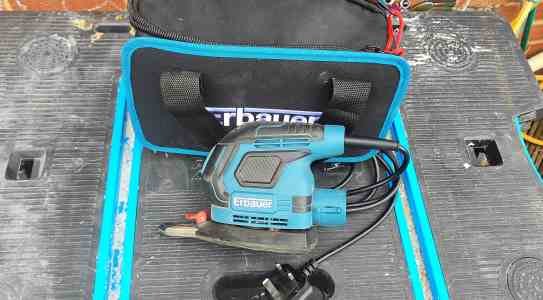
Detail sanders are great for getting into corners especially if they have a finger attachment. They are not very aggressive at sanding as they have the same vibration action that sheet sanders have.
Negatives
Detail sanders are too small for sanding larger area areas such as wooden worktops, and dust extraction is not very good.
Get in touch for your free same day quote.
01252 961927
Belt sander
Positives
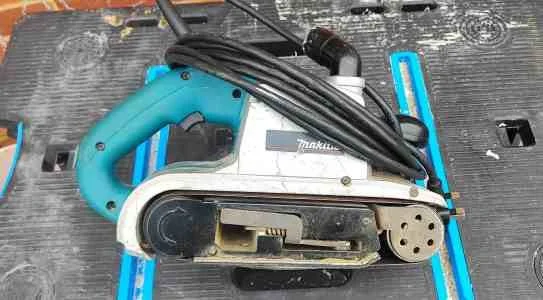
Belt sanders remove wood coatings relatively quickly, almost as quickly as an orbital sander, and are excellent at ensuring the surface is flat and uniform, great for stripping previous worktop coatings and stains.
Negatives
Can be tricky to handle and cumbersome, and requires a strong arm to operate.
Rotary Disc Sanders & Grinders
(Aggressive Material Removal)
Positives
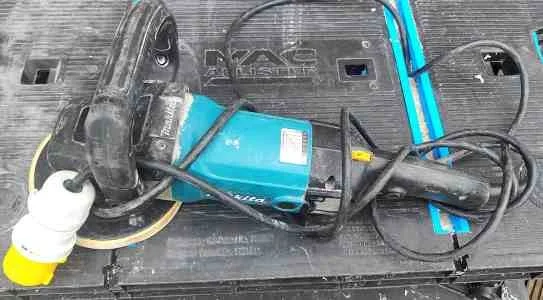
Orbital sanders are essentially slow-speed grinders, they are aggressive and can remove a lot of material very quickly at low speeds.
Negatives
Can be tricky to control and leave swirl marks in the wood, dust collection is poor and it’s bulky, should only be used by someone experienced, can burn surfaces and finishes at high speeds.
Sheet sanders
Positives
Sheet sanders are not very aggressive as they work by vibration and can provide a smoother finish than an orbital sander if users a careful with trapped debris
Negatives
Finer grits of paper can be awkward to source, dust extraction is not that great and if debris gets caught in the sandpaper it can lead to tram lines.
Wooden worktop sander tips
Always read the manufacturer’s manual and use the correct protective equipment, goggles, gloves etc.
Sanding wooden worktops requires attention to detail if you want to achieve a good finish.
Always sand with the grain and clean the worktops before you carry out work and when changing from a coarse grit to a finer grit paper.
Start by sanding your worktop with 60-grit or 80-grit sandpaper, and work your way through to 150 grit or 180 grit to achieve a smooth finish.
Ensure the surface is dust-free and grease-free before sealing using a tack cloth, hoover and methylated spirits.
Need a Professional, Dust-Free Finish Instead?
Sanding kitchen countertops yourself requires a massive investment in commercial tools to avoid destroying the wood or filling your home with fine dust. If you want a flawless finish without the DIY risk, check out our professional wooden worktop restoration service page.Our mobile surface repair team uses advanced, dust-extracting sanders to complete the job in a single day with zero mess.